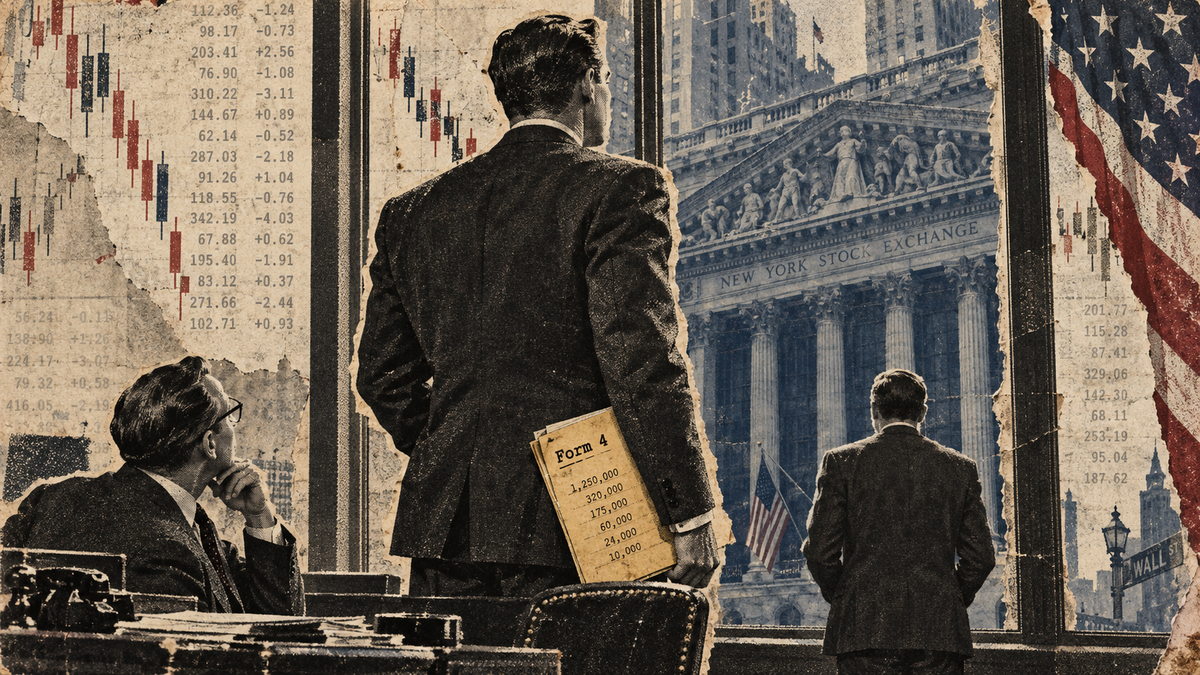
Five chief executives spent their own money buying their own stock in the week before the Fed hiked. Every filing is public, free, and two days old — and nobody sent it to you.
KEY POINTS
Uber's CEO bought 141,000 shares for $10,005,952 — filed where you can read it.
Ryan Cohen bought a million shares of GameStop, roughly $20.4 million.
All five were code P purchases: open market, personal money, no pre-set plan.
Every Form 4 reaches your screen within two business days, at no cost.
Uber's chief executive bought 141,000 shares on September 10. Ten million dollars, his own money, open market.
And two days later it was public, free, and sitting on a government website you can read right now.
The Fed hiked yesterday for the first time in three years. Those purchases were made the week before, into a 19-year high in long yields.
Which is the part worth your ten minutes, because you can verify every word of this yourself.
Who Bought, And When
Open-market purchases filed in the week of September 9 to 11:
•
Uber (NYSE: UBER) — CEO Dara Khosrowshahi, 141,000 shares, $10,005,952
•
GameStop (NYSE: GME) — CEO Ryan Cohen, 1,000,000 shares, about $20.4 million
•
Upstart (NASDAQ: UPST) — CEO Paul Gu, roughly $1.3 million
•
PVH (NYSE: PVH) — CEO Stefan Larsson, $1,000,001
•
Celsius (NASDAQ: CELH) — CEO John Fieldly, about $494,000
Every one of those is transaction code P on Form 4 — bought on the open market, with personal money, and none filed under a pre-set trading plan.
But that distinction is the whole point. A sale can mean tax, divorce, a plan someone set in March — it tells you almost nothing. A purchase at a specific price on a specific day has one explanation, and the executive making it is bound by the same insider rules you are.
You can pull all five yourself, on EDGAR, in about ten minutes. They cost you nothing.
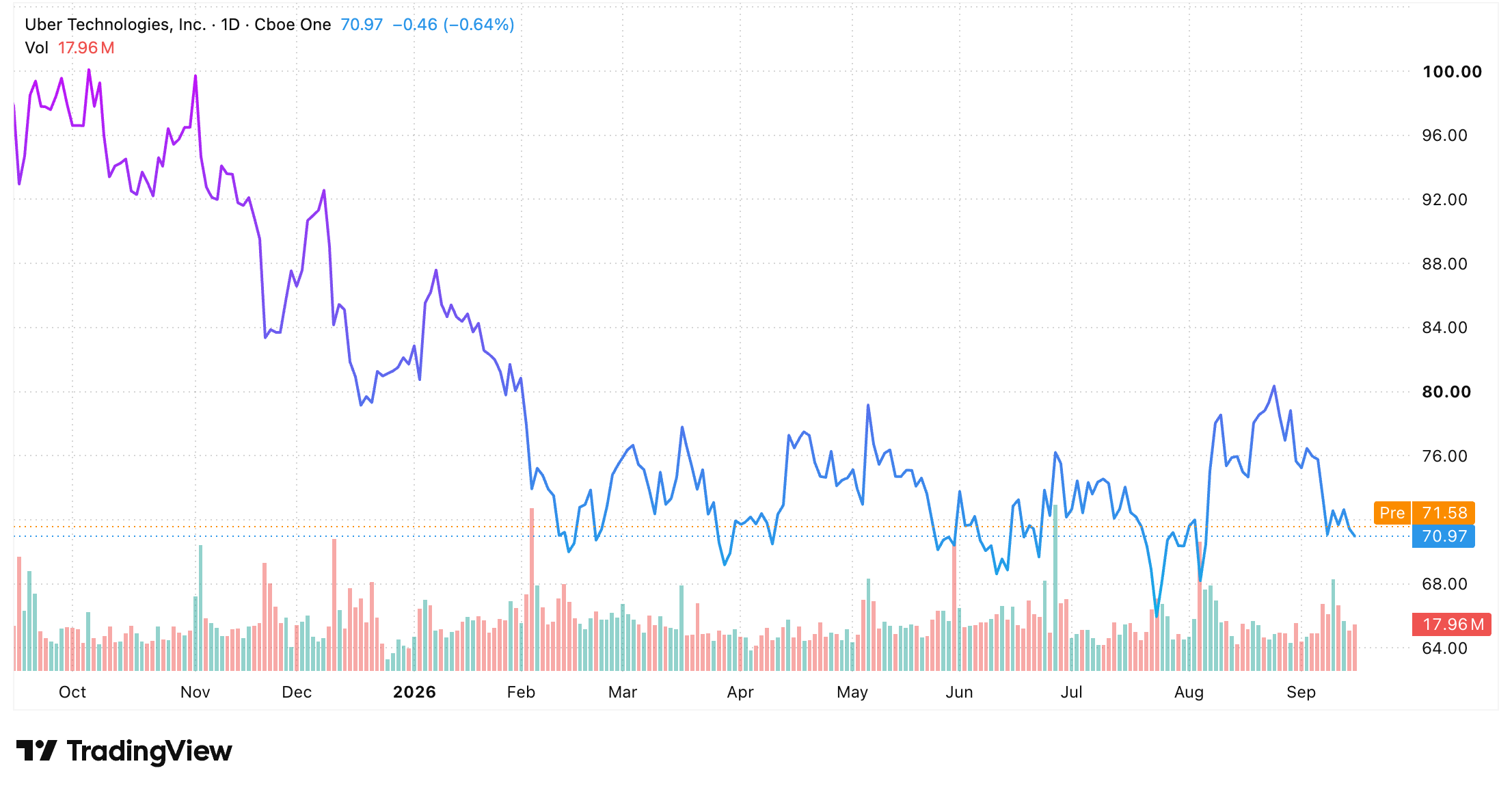
Where two executives bought, against a year of decline
What Uber's Filing Shows
Khosrowshahi paid a weighted average of $70.9642, in trades between $70.73 and $71.18.
$10,005,952.20.
That lifted his direct holding to 1,367,100 shares — an increase of roughly 11.5% in a stake he already had. Not a symbolic thousand shares.
And he wasn't alone. President and chief operating officer Andrew Macdonald bought 70,000 shares on September 4 at about $75.83, roughly $5.31 million, and the stock traded below that within days. He paid up and got it wrong in the short run.
Two of the three most senior people at the company, $15.3 million between them, into a stock down about 12% this year and more than 30% below where you could have sold it last year.
Uber also cut 3,300 jobs on September 2. Same two weeks.
Your read on that is as good as anyone's, and you have the same filing he does.
Cohen Bought A Million Shares
Ryan Cohen bought one million shares of GameStop at $20.3759 on September 10. About $20.4 million, held directly, no pre-set plan. A director added $100,000 that day.
Cohen already runs the company and owns a great deal of it, so the marginal information is lower than the headline suggests. But a cluster on one day is different from one man's conviction.
PVH is the quieter one, and probably the one closest to your own spending. Stefan Larsson bought exactly $1,000,001 of his own apparel company on September 11 — a round number, deliberately chosen, in a business squeezed by $4.15 gasoline and a hiking Fed.
And the same week produced $22.3 million of selling at Hinge Health (NASDAQ: HNGE), under a plan set back in June. Routine.
If you only read the headlines, that looks like the bigger story. Buying and selling aren't symmetrical signals. Only one has a single explanation.
What The Signal Is Worth
Insider buying is a modest signal. Executives are early, and Khosrowshahi himself sold near $95 a year ago.
But the asymmetry holds. For Band 1 holders hunting an entry, a cluster of open-market purchases into a falling price is information worth having, and it arrived before any newsletter told you about it. For Band 3, it changes nothing. Free either way.
Nobody called you about them. That's the position you're in, and it's fixable by you, this afternoon.
What to Watch
Two dates. September CPI lands October 14, the first inflation print the Fed sees after yesterday's move, and the one that prices your next six weeks. And the next decision comes at the end of October, with 16 of 18 officials penciling in another hike this year.
The risk against all of it: insiders bought before yesterday's hike, not after. A 12-0 vote and a dot plot pointing higher is new information they didn't have on September 10.
Watch whether any of them buy again at these prices. Your answer files within two days.