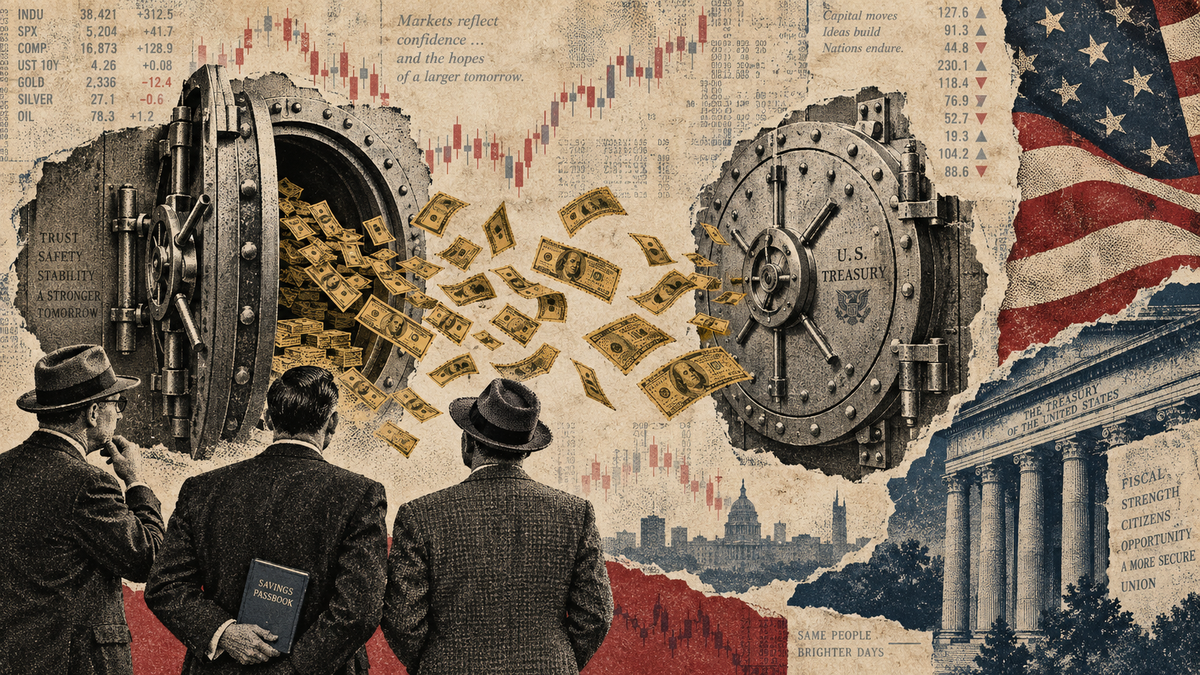
A five-year Treasury crossed 5% for the first time since 2007. Every bank now earns more on new money and loses on old — and your deposit decides which side wins.
KEY POINTS
The 5-year Treasury crossed 5% for the first time since 2007.
The 10-year reached about 5.11%, the highest since July 2007.
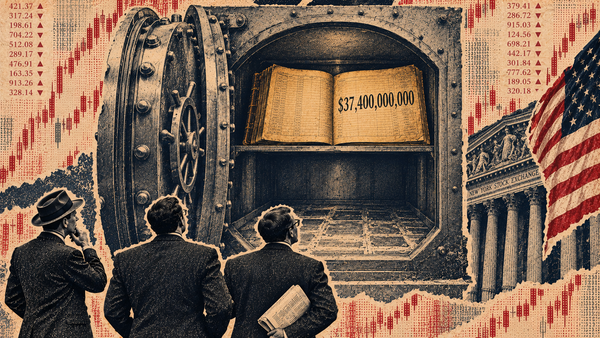
Banks held roughly $98 billion of unrealized bond losses — paper losses, unless depositors like you move.
Ten of 11 sectors fell Wednesday, and your bank's funding cost rose with them.
A five-year Treasury now pays 5%. Your bank probably doesn't.
That's the first time since 2007, and it landed the same week the 10-year touched 5.11% — the highest since July 2007.
Banks earn more on every new loan they write at those rates. And they lose on every old bond they already own.
Both at once. Which is the whole story, and where your cash sits decides how it ends.
Ten of 11 S&P sectors finished lower, led by communication services, utilities and consumer discretionary
•
Dow −0.68%, S&P 500 −0.75%, Nasdaq −1.13%
•
The causes: strong economic data, a weak Treasury auction and oil back near $99
One line matters most. The weak auction. It means buyers demanded a higher yield to take the government's paper, and every bank holding your money marks its bond portfolio against that same curve.
Your deposit sits on the other side of it, whether you opened the account in 2019 or last week.
And the bank holding it now competes with Washington for your money.
Why Banks Split In Two
A bank makes money on the gap between what it earns on loans and what it pays you on deposits.
At 5%, the earning side improves immediately. Every new loan, every maturing bond reinvested — all of it repriced upward, and that flows straight into profit, not into your account.
But the paying side moves too. Imagine a bank that bought $10 billion of 10-year Treasuries at 2%. At a 5% yield those bonds are worth somewhere near $7.5 to $8.5 billion, and the bank can hold them to maturity and get every dollar back — unless depositors like you want their cash first.
The Fed counted the unrealized losses on banks' available-for-sale bond portfolios at the end of last year.
$98 billion.
Paper losses, until someone has to sell.
That's the machinery. Old money down, new money up, and you standing between them.
Which Banks Survive This
Two things decide it, and neither is size alone.
Duration first. A bank holding long fixed-rate mortgages and 10-year paper takes the full markdown. A bank whose assets reprice inside two years barely notices.
Deposits second, and it matters more. Stable insured deposits stay put when a Treasury pays 5%. Yours might not. Uninsured money chases the yield, and a bank that loses funding has to sell the very bonds sitting at a loss, which is how a paper problem becomes a real one.
JPMorgan Chase (NYSE: JPM) sits at the comfortable end — diversified funding, shorter assets, the balance sheet everyone else gets measured against. The regional banks in the SPDR S&P Regional Banking ETF (NYSEARCA: KRE) sit at the other, with longer books and more commercial property lending. That's where your local lender probably sits. Same rate move, opposite outcomes.
And you get to choose which side your cash funds.
How To Size Your Exposure
Three things to watch. Not price.
Deposit costs in the next round of reports. Unrealized losses against equity. And commercial property loans.
For Band 3 holders, the useful position may not be the stock at all for you — a 5% five-year note pays more than most deposits do, and it's the same government the bank lends to.
For Band 1, rate cycles are when strong banks take share.
But your cash is already in this trade. Only your terms are negotiable.
What to Watch
Two dates. September CPI lands October 14, the first inflation print since the hike, and the one that sets your deposit rate next. And the Fed decides again at the end of October, with most of its officials expecting another move.
The risk cutting the other way: oil. Libya's largest field went offline this week to a blockade, and crude back near $99 is what pushed yields here. A resolution takes pressure off the curve, and off the banks with it — quickly, and in your favor.