Gold Surged 3.5%. Touched $4,500. Treasury Doubled Buybacks. Fed Overruled
Gold is now up 15% in August alone — its strongest monthly gain since September 1999 — driven by Treasury doubling long-dated bond buybacks while the Fed's own minutes showed officials wanted to hike

Key Points
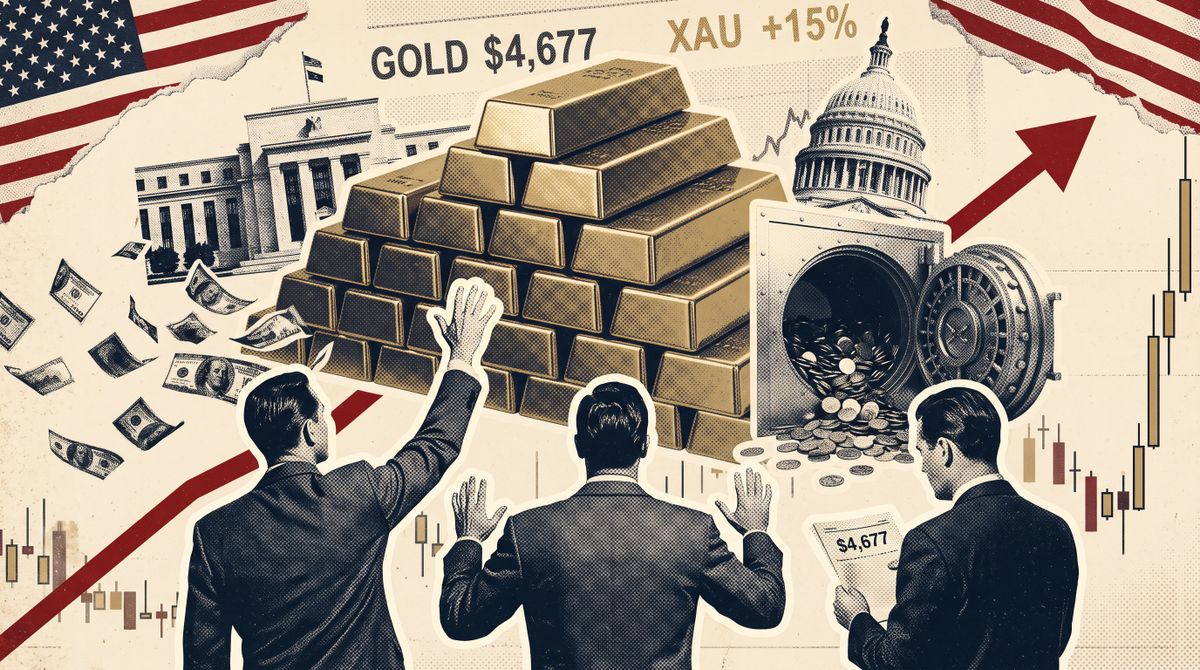
Gold hit $4,677 today, its highest since mid-May; August gains now exceed 15% — strongest monthly run since September 1999.The U.S. Treasury last week doubled its long-dated bond buyback operations, pushing 30-year yields lower and sending the dollar to a 3-month low.Friday’s Jackson Hole speech from Warsh at 10:00 AM ET is the direct tiebreaker — a dovish surprise is described by Citi as “ultra-bullish” for gold.
Gold’s at $4,677 this morning. That’s not a sentence from six months ago. That’s today.
Last week, the Treasury doubled its buyback operations for long-dated government bonds — quietly, without much fanfare — and long-term yields fell. The dollar hit a three-month low. And gold, which had been consolidating under $4,450 for weeks, broke out cleanly.
Your gold position, your GLD exposure, your miner allocation — they all just got a data point that matters. And the next one lands Friday morning.
What Actually Happened Last Week
The Treasury made a specific move. It didn’t cut rates. It didn’t change Fed policy. It doubled the size of its “liquidity support buyback operations” for securities in the 10-year to 30-year range — announced on August 19, the same day the Fed released minutes showing several officials wanted to hike at the July meeting.
That’s a direct contradiction between two arms of the U.S. government. And gold priced it immediately.
Here’s what moved on August 19:
- Gold: +4.33% to $4,521, touching $4,524.50 — clearing resistance it had spent weeks underneath
- Silver: +5.29% to $66.55
- Platinum: +6.14% to $1,815
- 30-year Treasury yield: pulled back toward 5.2% from 5.27%
- Dollar index: fell to a 3-month low
The move made sense. Lower long-term yields reduce the “cost” of holding non-yielding gold. A weaker dollar makes gold cheaper in every currency but dollars. Both conditions showed up simultaneously because the same Treasury announcement caused both.
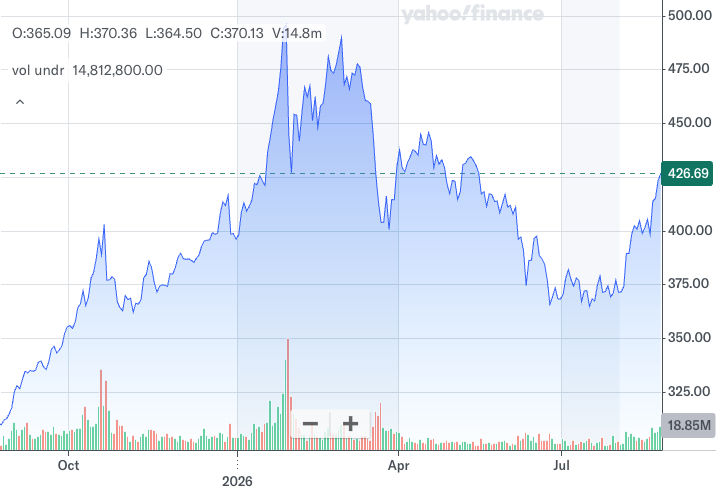
And it hasn’t reversed. Gold is at $4,677 today. That’s a 15%+ gain for August alone — the strongest monthly move since September 1999.
The Bear Case — and Why It Has Weight
Don’t ignore it. Gold at $4,677 is up 15% in a month. That’s not nothing.
The bear case is specific: the Fed’s own minutes showed several officials wanted to hike at the July meeting. September rate hike odds, which sat at roughly 1-in-3 before the Treasury announcement, have actually moved to 56% as of last week’s Kitco data. Higher-for-longer rates are bad for gold. If Warsh signals hawkish at Jackson Hole Friday — even subtly — gold’s rally reverses sharply on an asset with no yield to buffer the drawdown.
And the Treasury move itself has a credibility question. The Fed is trying to hold rates firm on short-term policy. The Treasury is pulling down long-term yields by buying back its own debt. These two arms of the government are working in opposite directions. That’s not a stable configuration. If bond markets start reading the Treasury buyback as fiscal panic rather than liquidity management, yields could spike back up — and take gold’s rally with them.
Wells Fargo cut its 2026 gold target earlier this month to $4,900-$5,100. That’s still above current levels. But they cited “persistent high rates and a strong dollar” as the risk case — exactly the scenario that a hawkish Warsh speech delivers.
The Bull Case Is Structural, Not Tactical
But here’s the part that doesn’t depend on Warsh.
$40 trillion.
U.S. government debt crossed $40 trillion last week for the first time. Treasury Secretary Scott Bessent has indicated that further buybacks could follow the August 19 move — and the administration is preparing additional measures to address elevated financing costs. That’s not a one-time intervention. It’s a policy direction.
And central banks aren’t selling. The World Gold Council projects central banks will be net buyers of gold for the rest of 2026, as reserve managers continue moving away from dollar-denominated assets. Central bank demand creates a floor that doesn’t respond to daily price moves or Fed commentary. It’s structural, not tactical.
The structural case for gold — fiscal excess, dollar debasement, reserve diversification — has been in place for years. What changed last week is that the U.S. Treasury itself handed gold the short-term catalyst that the structural case needed.
UBS maintains a $5,000 target. Citi says a dovish Warsh Friday would be “ultra-bullish” for gold, driving renewed focus on “the debasement trade amid concerns on Fed independence and US debt sustainability.” That second phrase is the structural case with a trigger date attached.
What Your Gold Position Faces This Week
Two scenarios. Friday decides which one plays out.
If Warsh is neutral or dovish: the structural and tactical cases converge. Gold holds above $4,600, the August rally continues, and your GLD, PHYS, or miner positions get a macro tailwind going into Q4.
If Warsh is hawkish: short-term rates get a shock, the dollar rebounds, and gold pulls back — probably toward the $4,450 level it broke through last week. Your gold position gives back some of August’s gains in a matter of hours.
For Band 3 holders who’ve owned physical gold or GLD as wealth-preservation for years: Friday doesn’t change your thesis. It changes the short-term price.
The structural case is intact regardless of what Warsh says.
What to Watch
Friday August 28, 10:00 AM ET — Warsh's Jackson Hole keynote is the direct rate signal for gold. A neutral or dovish tone extends the August rally toward UBS's $5,000 target. A hawkish surprise sends gold back toward $4,450.
Also Wednesday August 26: PCE inflation data at 8:30 AM ET — if July PCE comes in above 2.5%, it reinforces the case for a September hike and adds pressure to gold before Warsh even speaks.
Key risk: September rate hike odds are already at 56% and rising. Warsh doesn't need to surprise the market to hurt gold — he just needs to confirm what the market is already partially pricing.