Northrop Grumman Reports This Morning. Here's the Contested Case
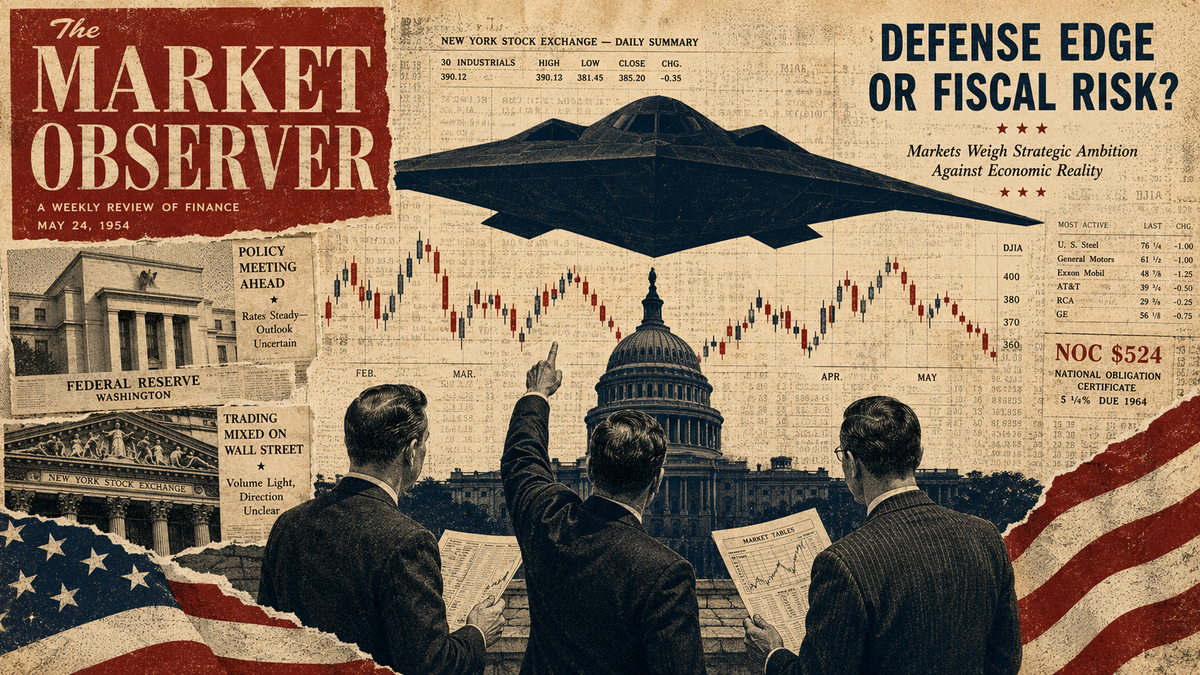
NOC trades 25% below the analyst consensus price target with a record $95.6B backlog — and a cost overrun on its most important program that the market hasn't forgiven.
Key Points
NOC trades at ~$524, against an analyst consensus price target of $698 — a 33% implied upside gap.Northrop’s backlog reached a record $95.6B, providing multi-year revenue visibility across all four segments.Consensus Q2 estimates: EPS of $6.82–$6.84, revenue of $10.78–$10.81B, up ~4% year over year.
If you hold Northrop Grumman (NYSE: NOC) or have been watching it from the sidelines, today is the morning that clarifies the setup.
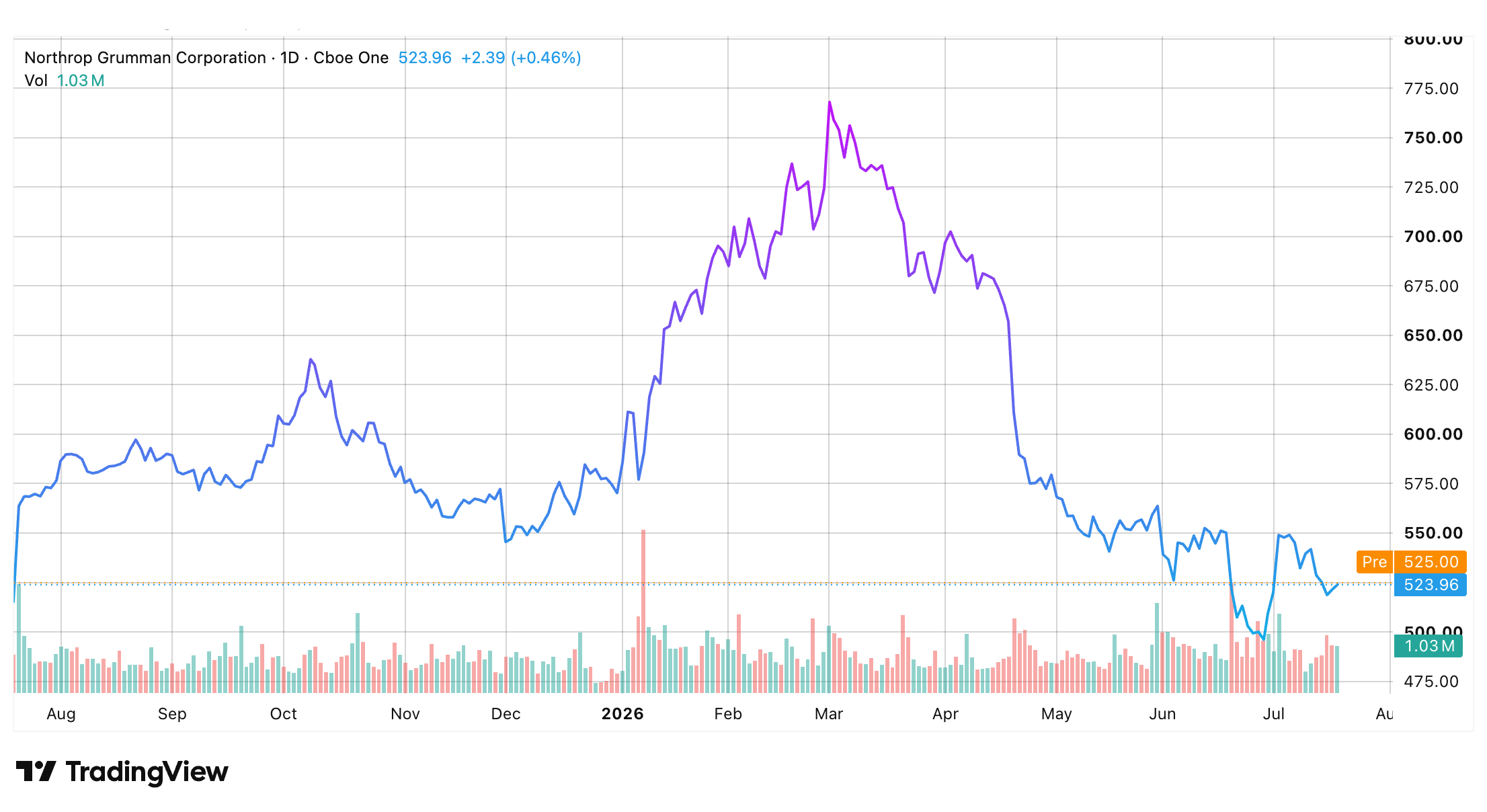
NOC reports Q2 results before the open, with a 9:30 a.m. ET earnings call. The stock closed Monday at approximately $523.96 — well below the analyst consensus price target of $698. That gap does not exist because analysts are wrong about the backlog. It exists because the market is pricing in execution risk that the backlog number alone does not resolve.
The Setup: Record Backlog, Discounted Stock
Northrop Grumman enters today’s print with the largest backlog in its history — $95.6 billion as of Q1 2026. That number represents nearly 2.5 years of revenue at the current run rate. It is not a soft pipeline; it is awarded contracts with funded delivery schedules across aeronautics, defense systems, mission systems, and space.
The stock’s story, however, is not the backlog. It’s what the stock has done despite the backlog:
- NOC peaked in early 2026, gained roughly 20% before giving all of it back
- Current price ~$524 sits 25% below the $698 analyst consensus price target
- Defense sector peers down 2.9% on average over the past month — NOC tracking that weakness
- Quarterly dividend raised to $2.47/share in Q2, up from $2.31 — annualized yield approaching 1.9% at current price
- FY2026 EPS guidance reaffirmed at $27.40–$27.90
For your position in NOC — or any broad defense ETF that holds it — the question today is whether the backlog translates to earnings visibility, or whether execution headwinds on the Sentinel program keep the discount in place.
The Bear Case: Sentinel and the Execution Discount
The Sentinel program is Northrop’s intercontinental ballistic missile modernization contract — one of the largest single defense programs in U.S. history. It is also the source of the execution risk the market is pricing.
Sentinel has faced cost overruns, timeline slippage, and ongoing renegotiation of contract terms with the Air Force. The program triggered a Nunn-McCurdy breach — a statutory threshold that requires congressional notification when a major defense program exceeds cost estimates by 15% or more. That breach, and the subsequent restructuring discussions, have weighed on NOC shares for most of 2025 and into 2026.
The bear case is specific: if Sentinel cost growth accelerates and the Air Force restructures the contract on terms unfavorable to Northrop, the EPS impact could more than offset the revenue growth the backlog implies. The market is not pricing in the backlog at face value because it is discounting the probability that Sentinel erodes a meaningful portion of that backlog’s profitability.
For Band 2 and Band 3 holders of NOC: this is the overhang that explains why your position has underperformed the defense sector despite strong top-line execution.
The Bull Case: Defense Spending and Geopolitical Tailwinds
The bull case for NOC does not require Sentinel to be resolved — it requires the rest of the portfolio to carry the weight while Sentinel stabilizes.
The Iran conflict re-escalation, ongoing Red Sea shipping disruptions, and rising allied defense commitments across NATO are generating real contract awards. The U.S. defense budget is tracking toward approximately $1.1 trillion in FY2027 per Morgan Stanley estimates. Northrop has positioned its missile defense, airborne radar, and space systems segments directly in the path of that spending increase.
Q1 2026 showed the formula working: revenue of $9.88 billion beat estimates, up 4.4% year over year. Management guided for “high single-digit sequential sales growth” in Q2. If Q2 delivers on that guide, the revenue line validates the backlog thesis.
The dividend raise from $2.31 to $2.47 per quarter signals management’s confidence. At current prices, Band 3 holders collecting income are being paid to wait for Sentinel clarity.
What Today’s Print Needs to Show
The number to watch is not EPS versus consensus. It is the Sentinel commentary.
If management provides a timeline for contract restructuring completion and signals cost containment, the execution discount narrows. If guidance on Sentinel remains vague or worsens, the gap between $524 and $698 stays wide regardless of the headline beat.
The position for established holders: today’s call tells you whether the discount is temporary or structural. The edge belongs to those who know which one they’re sitting in.
What to Watch
- Today, July 21 — NOC earnings call at 9:30 a.m. ET: Watch Sentinel contract update and segment operating margin guidance. Any clarity on restructuring timeline is the catalyst that closes the $698 gap.
- Wednesday, July 23 — RTX Corporation earnings: Defense peer with an Earnings ESP of +2.02%; read-through on sector execution trends.
- Key risk: Iran conflict re-escalation is driving oil higher and defense sentiment up — but if a ceasefire materializes before the next budget cycle, the geopolitical tailwind fades faster than the backlog can absorb it.