Your Power Bill Rose 4.2%. Your Utility Position Didn't.
Electricity was the quiet line in yesterday's CPI, and the demand behind it is already under contract into the 2030s. Your meter and your dividend now run off the same buildout.

Key Points
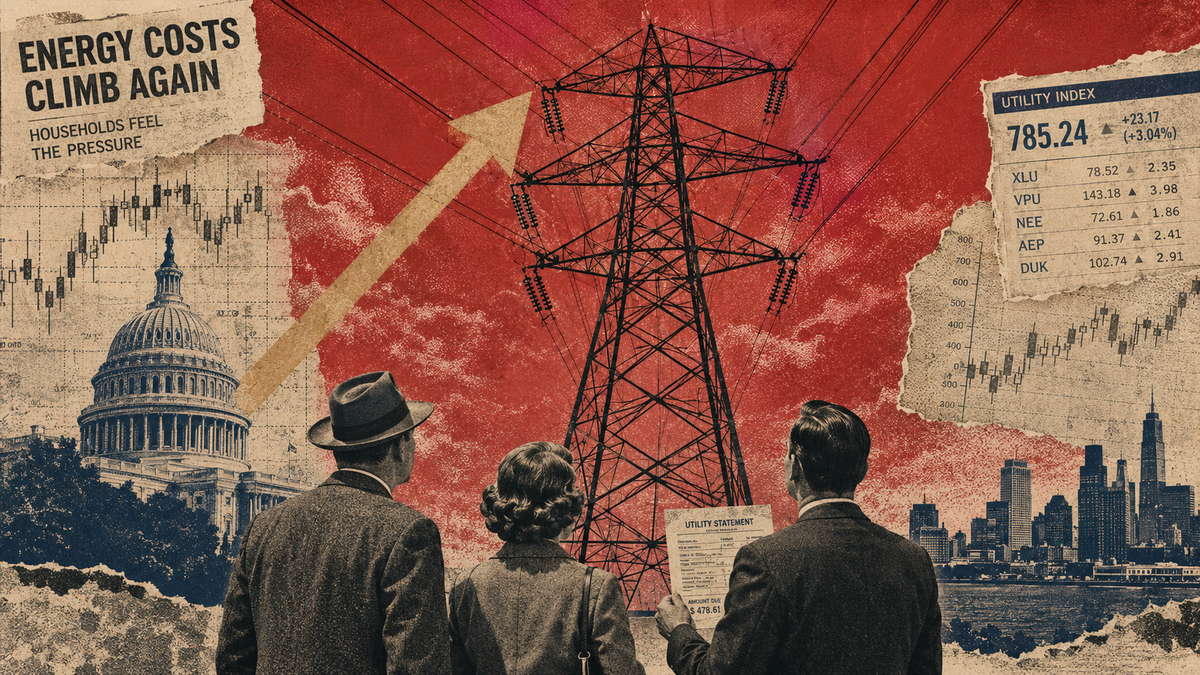
Electricity rose 4.2% over twelve months while core inflation ran 2.5%.
PJM capacity cleared at $329.17 per megawatt-day, against $28.92 two auctions earlier.
Sixty-seven million people sit inside the PJM grid absorbing those capacity costs.
Your electric bill rose 4.2% over the past year. That’s from yesterday’s inflation report, and almost nobody led with it.
Headline inflation cooled to 3.4%. Gasoline fell. But the electricity line didn’t, and you’ll feel that one every month regardless of what the tape does.
So your power bill and your utility holdings now run on the same engine. You’re funding the buildout twice — once at the meter, once through what your dividends have to cover.
Electricity Broke From the Inflation Trend
Four-point-two percent. Against 2.5% core.
That gap is the whole story, and it’s been sitting there all year while everybody argued about gasoline and shelter and whether the Fed had already won the fight it picked back in 2022.
Yesterday’s report gave you the components:
- Electricity: up 4.2% over twelve months, up 0.1% in July alone
- Piped gas service: up 4.3% over twelve months
- Core inflation: up 2.5% — the slowest line in the release
- Energy commodities: down 2.9% in July, so gasoline did the cooling
- This morning’s producer price release showed the electric power index rising again
Gasoline you can drive less.
Electricity you can’t.
And that’s the line that matters for a household budget you’ve spent thirty years building, because it’s the one cost in the release that doesn’t respond to how carefully you shop.
Where the Money Actually Flows
Regulated utilities don’t really earn on power. They earn on poles.
A utility gets an authorized return on capital it puts in the ground — lines, substations, transformers — and the regulator lets it recover that through your rate. So building isn’t a cost to them.
It’s the product.
$329.17 per megawatt-day.
That’s what reserve power cleared at in PJM’s capacity auction for the delivery year that started this June, against $28.92 per megawatt-day just two auction cycles earlier, which isn’t a typo. PJM’s own market monitor attributed the bulk of the prior year’s increase to data center load. Sixty-seven million people live inside that footprint.
And every dollar of it lands on a bill before it lands in your dividend.
But that also means the spending you’re complaining about at the mailbox is the same spending funding the payout you’re depending on.
Not Every Utility Wins Here
Two different businesses wear the same sector label, and you probably own both.
Regulated names — NextEra Energy (NYSE: NEE), Dominion Energy (NYSE: D) — grow earnings by growing what they’re allowed to invest, and a state commission sets the ceiling.
Slow. Legible. Boring by design.
Merchant generators — Constellation Energy (NASDAQ: CEG), Vistra (NYSE: VST) — sell into the market and sign long-dated contracts with the data center operators, so their earnings track power prices rather than a regulator’s ruling on your rate.
And the affordability fight is where this gets settled. Commissions across the PJM states are facing organized pressure over bills that jumped after the last two auctions, and a commission that won’t approve an increase caps the regulated case.
That risk is real. It’s also the bear case nobody prices until it prints in your statement.
For your income, the question is whether you’re holding a bond that grows or an option on electricity.
Where the Exposure Actually Sits
Two ways in. And they’re not the same.
The fund route — the Utilities Select Sector SPDR (NYSEARCA: XLU) — gives you the whole grid, regulated and merchant, which blunts the commission risk and the upside with it.
If you’re drawing income — Band 3 — the regulated side carries the payout history. If you’re still accumulating — Band 1 — the merchant side holds the asymmetry.
That 4.2% already showed up on your bill.
Whether it shows up anywhere else is your decision.
What to Watch
Two dates matter. August producer prices land Thursday, September 10; August CPI lands Friday, September 11 — and the electricity line inside it tells you whether 4.2% was the ceiling or the floor.
Watch state commission dockets between now and then. Several PJM-state regulators are weighing whether data center load pays its own way or whether your bill does.
The risk sits on the other side: if data center load forecasts get cut, the merchant contracts that justify today’s multiples get repriced first.